Einbürgerungstest
Sachsen
3 of the 10 questions about Sachsen (Saxony) come up in the test. Sachsen is a Freistaat (free state). That is just another name for a federal state.
Location and places
Sachsen lies in the far east of Germany. In the east it borders Poland, in the south the Czech Republic. Its German neighbours are Bayern, Thüringen, Sachsen-Anhalt and Brandenburg. On the map, Sachsen is therefore the state in the corner between Poland and the Czech Republic, to the right of Thüringen.
The state capital is Dresden. Leipzig and Chemnitz are also large cities, but not the capital. Sachsen has 10 districts (Landkreise), for example the Vogtlandkreis around Plauen or the Erzgebirgskreis (as of January 2026).
Colours and coat of arms
The state colours are white and green (Weiß und Grün). The coat of arms shows many horizontal stripes in black and gold. A green wreath of small leaves, the Rautenkranz, lies diagonally across them.
Politics
The Landtag is elected for five years. It elects the head of the government. This office is called Ministerpräsidentin or Ministerpräsident (minister-president). The state government (Staatsregierung) also includes ministries, for example for the interior, finance and justice. There is no foreign ministry. Under the Grundgesetz, relations with other countries are the job of the federal government (Bund).
In local elections (Kommunalwahlen) you can vote in Sachsen from age 18 (as of November 2026). You can get information on political topics from the Sächsische Landeszentrale für politische Bildung (Saxon agency for civic education) in Dresden. It offers books, booklets and events.
Question sachsen-01
Welches Wappen gehört zum Freistaat Sachsen?

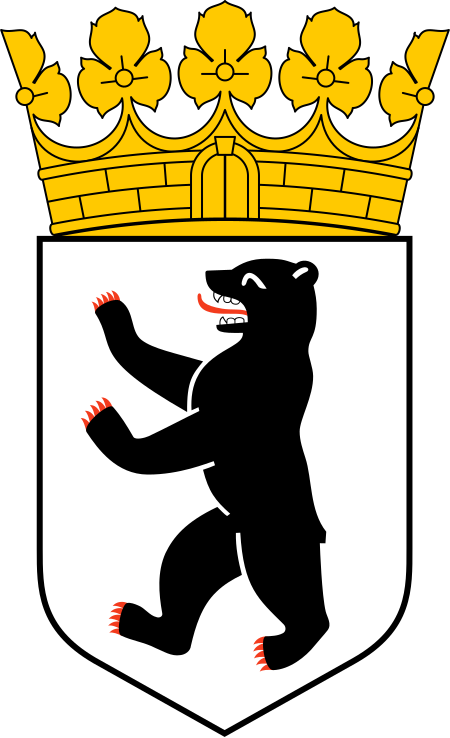
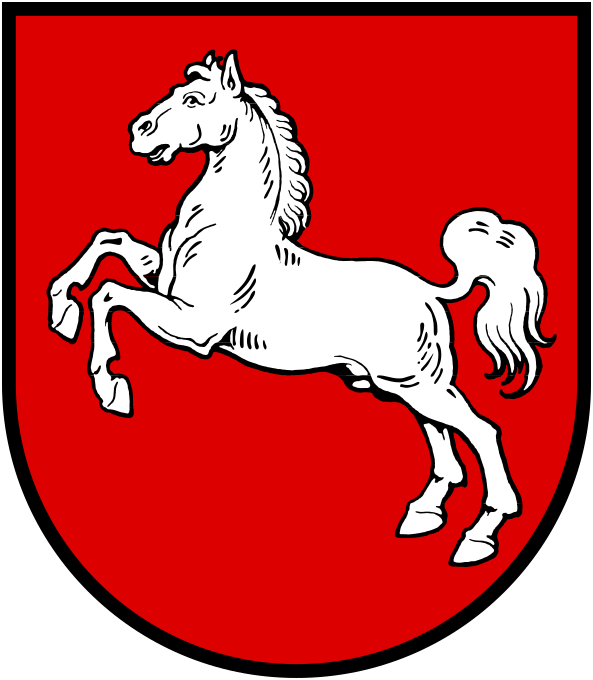
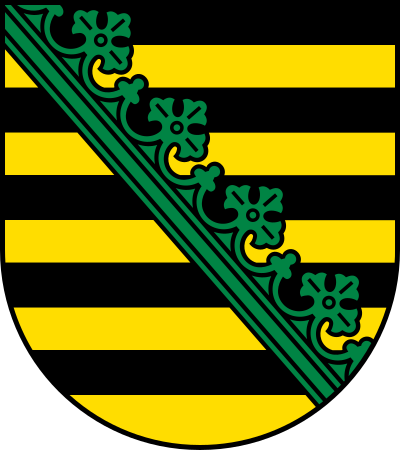 (correct answer)
Explanation
The coat of arms of Sachsen (Saxony) shows black and gold stripes. A green Rautenkranz (crown of rue) lies diagonally across them. This coat of arms is picture 4.
- „Bild 1“: The blue and white diamonds belong to Bayern (Bavaria).
- „Bild 2“: The black bear is the coat of arms of Berlin.
- „Bild 3“: The white horse on red is the coat of arms of Niedersachsen (Lower Saxony).
Question sachsen-02
Welches ist ein Landkreis in Sachsen?
- Vogtlandkreis(correct answer)
- Altötting
- Uckermark
- Nordfriesland
Explanation
The Vogtlandkreis lies in the southwest of Sachsen (Saxony), on the border with Bayern (Bavaria) and the Czech Republic. A Landkreis (district) joins several municipalities and handles tasks such as rubbish collection or driving licences.
- „Altötting“: A district in Bayern (Bavaria).
- „Uckermark“: A district in Brandenburg, in the northeast.
- „Nordfriesland“: A district in Schleswig-Holstein, in the far north on the North Sea.
Question sachsen-03
Für wie viele Jahre wird der Landtag in Sachsen gewählt?
- 3
- 4
- 5(correct answer)
- 6
Explanation
The state constitution of Sachsen (Saxony) says that the Landtag (state parliament) is elected for five years. After that there is a new state election. Most federal states have five years today.
- Nr. 3: No German parliament has such a short term.
- Nr. 4: Four years apply to the Bundestag (federal parliament) and the Bürgerschaft (state parliament) in Bremen, not in Sachsen (Saxony).
- Nr. 6: No German state election has six years. But this number exists in some local elections, for example in Bayern (Bavaria).
Question sachsen-04
Ab welchem Alter darf man in Sachsen bei Kommunalwahlen wählen?
- 14
- 16
- 18(correct answer)
- 20
Explanation
In Sachsen (Saxony) you may vote in local elections only from the age of 18. Some other states have lowered the voting age for local elections to 16, Sachsen has not. Local elections choose the municipal council, the town council or the district council (Kreistag).
- Nr. 14: Nowhere in Germany can you vote this young.
- Nr. 16: Some other states let 16-year-olds vote, for example Sachsen-Anhalt. Sachsen does not have this rule.
- Nr. 20: A voting age of 20 does not exist in Germany.
Question sachsen-05
Welche Farben hat die Landesflagge von Sachsen?
- blau-weiß-rot
- weiß-grün(correct answer)
- grün-weiß-rot
- schwarz-gelb
Explanation
The state flag of Sachsen (Saxony) has two horizontal stripes, white on top and green below. The green also appears in the coat of arms of Sachsen, in the green Rautenkranz (crown of rue).
- „blau-weiß-rot“: These are the colours of the flag of Schleswig-Holstein.
- „grün-weiß-rot“: No German state flag looks like this. Sachsen has only two colours.
- „schwarz-gelb“: Black and yellow belong to other states, for example Baden-Württemberg (black and gold).
Question sachsen-06
Wo können Sie sich in Sachsen über politische Themen informieren?
- bei der Landeszentrale für politische Bildung(correct answer)
- beim Ordnungsamt der Gemeinde
- bei den Kirchen
- bei der Verbraucherzentrale
Explanation
The Landeszentrale für politische Bildung (state centre for civic education) gives neutral information about politics, elections and democracy. It belongs to the state of Sachsen (Saxony). You can get free booklets and books there. There are also events.
- „beim Ordnungsamt der Gemeinde“: The Ordnungsamt (public order office) keeps order in the municipality, for example with illegal parking or noise. Civic education is not one of its tasks.
- „bei den Kirchen“: The churches are religious communities. They are there for faith and social help, not for neutral political information.
- „bei der Verbraucherzentrale“: The Verbraucherzentrale (consumer advice centre) gives advice on shopping, contracts and prices. It does not inform about politics.
Question sachsen-07
Die Landeshauptstadt von Sachsen heißt …
- Leipzig.
- Dresden.(correct answer)
- Chemnitz.
- Zwickau.
Explanation
Dresden is the capital of Sachsen (Saxony). The Landtag (state parliament) and the state government sit there. Dresden lies on the Elbe and is known for the Frauenkirche.
- „Leipzig.“: Leipzig is the largest city in Sachsen, but not the capital.
- „Chemnitz.“ and „Zwickau.“: These cities are in Sachsen. But the Landtag and the government do not sit there.
Question sachsen-08
Welches Bundesland ist Sachsen?
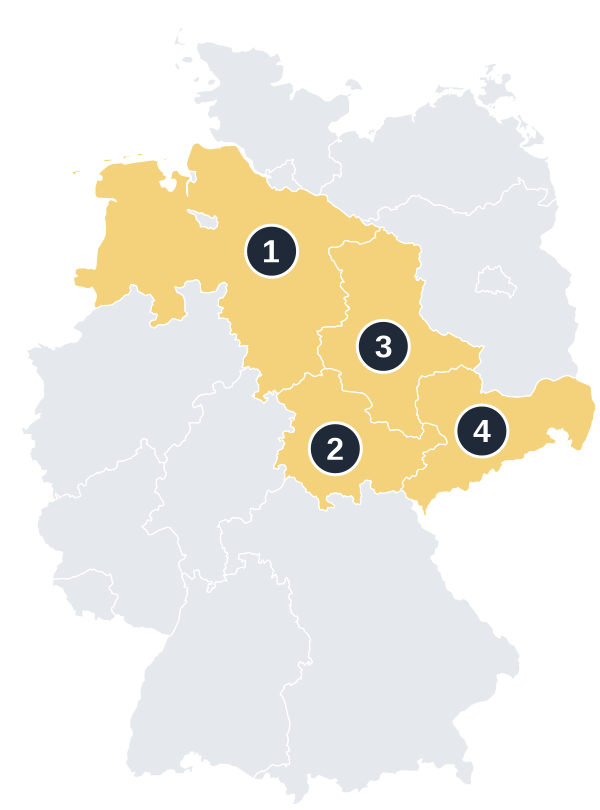
- 1
- 2
- 3
- 4(correct answer)
Explanation
Sachsen (Saxony) lies in the far east of Germany. It borders Poland and the Czech Republic. On the map it is state number 4, with Dresden as its capital.
- Nr. 1: This is Niedersachsen (Lower Saxony) in the northwest, on the North Sea. It has a similar name but is far away.
- Nr. 2: This is Thüringen (Thuringia) in the middle of Germany, west of Sachsen.
- Nr. 3: This is Sachsen-Anhalt (Saxony-Anhalt), north of Thüringen. It does not border any country outside Germany.
Question sachsen-09
Wie nennt man die Regierungschefin/den Regierungschef in Sachsen?
- Erste Ministerin/Erster Minister
- Premierministerin/Premierminister
- Bürgermeisterin/Bürgermeister
- Ministerpräsidentin/Ministerpräsident(correct answer)
Explanation
In all non-city states the head of the state government is called Ministerpräsidentin or Ministerpräsident (minister-president). The Landtag (state parliament) of Sachsen (Saxony) elects this person. They lead the government and appoint the ministers.
- „Erste Ministerin/Erster Minister“: This title does not exist for heads of government in Germany.
- „Premierministerin/Premierminister“: Some other countries use this title. The German states do not.
- „Bürgermeisterin/Bürgermeister“: A Bürgermeister (mayor) leads a town or municipality, not a whole federal state.
Question sachsen-10
Welche Ministerin/welchen Minister hat Sachsen nicht?
- Justizministerin/Justizminister
- Außenministerin/Außenminister(correct answer)
- Finanzministerin/Finanzminister
- Innenministerin/Innenminister
Explanation
Under the Grundgesetz (Basic Law), foreign policy is a matter for the federal government. So there is only one foreign minister for all of Germany, in Berlin. Sachsen (Saxony) does not have this office either.
- „Justizministerin/Justizminister“: This really exists. Sachsen (Saxony) is responsible for its courts and prisons.
- „Finanzministerin/Finanzminister“: This really exists. The finance ministry manages the state's money, for example for schools and the police.
- „Innenministerin/Innenminister“: This really exists. In Germany the police is mainly a matter for the states, so every state has an interior ministry.