August 14, 2026
How Long Is a Goethe or telc Certificate Valid?
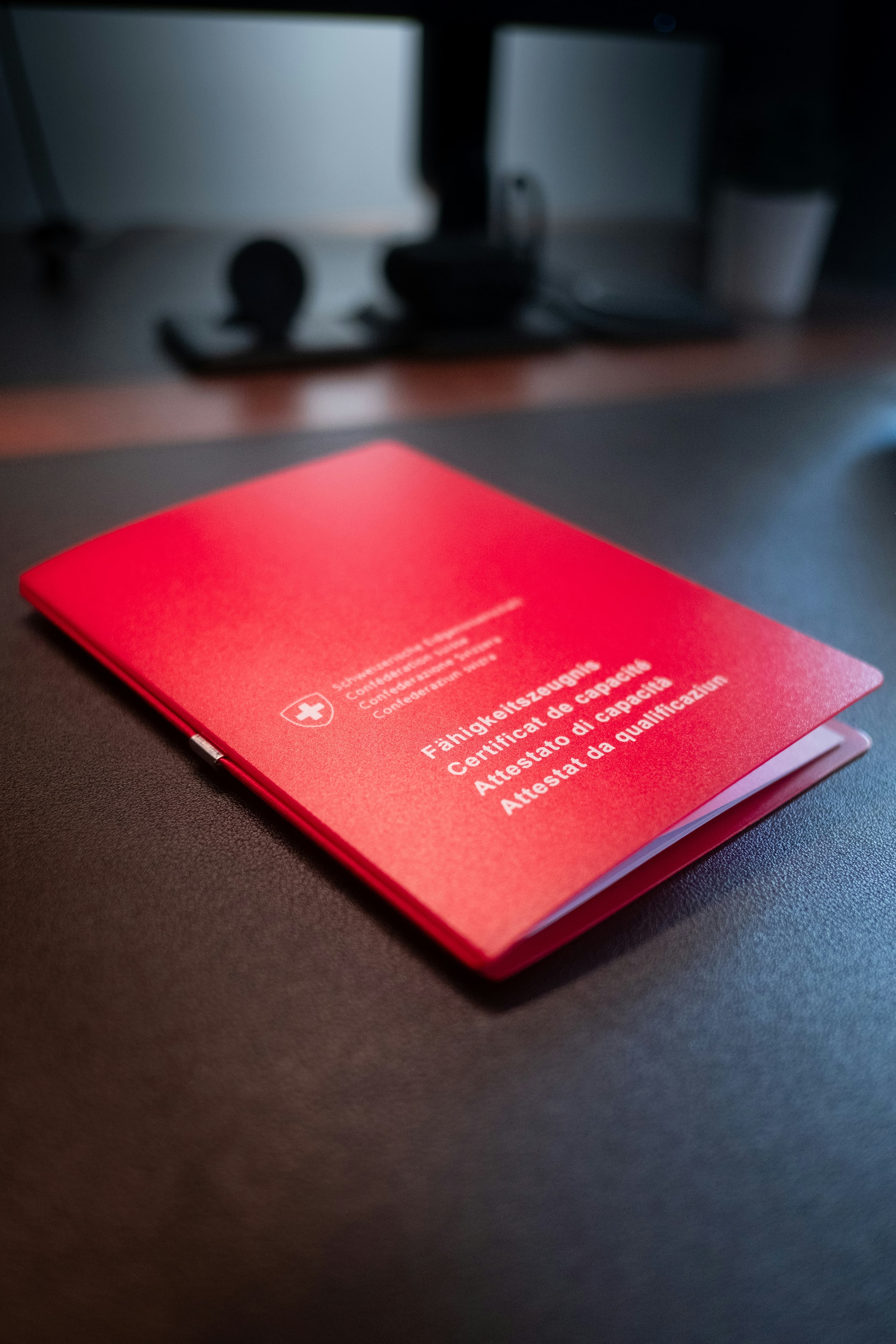
Short version: a Goethe-Zertifikat and a telc certificate don't expire. The paper you get after passing is valid for the rest of your life. Nobody at Goethe or telc will ever tell you your B2 has "run out."
So why does every university admissions page, employer, and visa checklist seem to want a certificate "issued within the last two years"? Because those are two different things. The certificate's own validity is permanent. The recency rule is something the institution reading it imposes, and it has nothing to do with the certificate expiring. Getting this distinction right saves you from either panicking that your old certificate is worthless, or assuming a five-year-old one will sail through admissions when it won't.
Do Goethe and telc certificates expire?
No. Both providers state this plainly in their own FAQs. The Goethe-Institut says the Goethe-Zertifikat is valid without a time limit. telc says that once you've passed both parts of an exam, the language certificate has no expiry date. There's no renewal, no re-validation, no "valid until" line printed on it.
That makes sense when you think about what the certificate actually records: that on a specific date, you demonstrated a specific level of German. That fact doesn't stop being true. A B1 you earned in 2019 still proves you could do B1 things in 2019. The certificate is a permanent record of a past performance, and past performance doesn't expire.
The catch, and the reason this post exists, is that the people asking for your certificate often don't care what you could do in 2019. They care what you can do now, and they use the certificate's date as a rough proxy for that.
"Never expires" is the official line from both providers, and it's genuinely true of the document. It is not a promise that every institution will accept an old one. Those are separate questions with separate answers, which is exactly where people get tripped up.
Then why do institutions want a recent one?
Because a language level is a snapshot, not a permanent trait. Skills fade. Someone who passed B2 five years ago and hasn't spoken German since is probably not sitting at B2 anymore, and admissions offices and employers know it. So they apply their own rule of thumb, and the most common one is: the certificate must be dated no more than two years ago.
This two-year window is not a Goethe or telc policy. It's an institutional convention, and it varies:
- Universities and uni-assist. Many German universities, and the uni-assist application service that processes international applications for a lot of them, ask for a language certificate issued within the last two years. Some programs are stricter, some don't state a limit at all. It's set per program, so you check the specific program's admission requirements, not a general rule.
- Employers. A recent certificate reads as "current level." An old one invites the question of whether you've kept it up. There's no fixed rule here, but if you earned your certificate years ago and your day-to-day German has moved on, a fresh sitting can be worth more than the old paper.
- Visa and immigration authorities. These can be the strictest. Some German missions and authorities want a language certificate issued within the last year for visa purposes, tighter than the two-year academic norm. If a certificate is feeding a visa file, treat one year as the safe assumption and confirm with the specific authority.
So the honest answer to "how long is my certificate valid" is: forever as a document, but often only about two years as proof of your current level in the eyes of whoever's reading it, and sometimes only one year for official immigration use.
The one real exception: partial passes
There is a case where a real, provider-set clock ticks, and it's easy to confuse with expiry. It's not the finished certificate that has a deadline. It's a half-finished exam.
telc. If you pass only one part of a telc exam (say the written block but not the oral) your result for that passed part is valid for 12 months from the date of issue of the score sheet. Within that window you can sit just the failed part and combine the two into a full certificate. Let the 12 months lapse and the passed part no longer counts. You'd resit the whole exam. Once you hold the complete certificate, though, that 12-month clock is gone and the certificate never expires.
Goethe. From B1 upward the Goethe-Zertifikat is four independent modules, and each module you pass is recorded on its own. To get a single combined certificate listing all four, you need to have passed all four within roughly a 365-day window. Pass three modules, wait too long, and the early ones fall outside the window for combining into one document. This is the same "assemble the parts before the clock runs out" logic as the telc partial-pass rule. We cover both in detail in what happens if you fail the Goethe or telc exam.
Don't confuse these two clocks. The 12-month telc partial-pass window and the 365-day Goethe module-combining window apply to unfinished exams, before you hold the full certificate. A complete, passed certificate has neither clock. It doesn't expire, full stop.
How this differs from university-admission exams
If your goal is studying in Germany, note that the dedicated admission exams behave a little differently from the general Goethe and telc certificates, and it's worth not mixing them up.
TestDaF and DSH results also don't carry a printed expiry, but universities routinely apply the same recency expectation, often two years, and DSH in particular is tied to the admission cycle you take it for. A DSH sat at one university for one intake isn't automatically a portable, forever-valid credential the way a Goethe-Zertifikat is. If you're weighing which admission exam to sit, our TestDaF vs DSH vs Goethe C1 guide walks through how each one is accepted and how portable it is.
What to actually do about it
The practical takeaway is simple: time your exam to when you'll use it, not years ahead.
If you already know you'll apply to a German university next autumn, sit the exam in the six to twelve months before, not "whenever you feel ready" three years early. A certificate that's a few months old sails through any two-year rule and reflects a level you can actually still perform. Sitting too early just means a fresh certificate later anyway.
If you already hold an older certificate:
- Check the specific institution's rule before assuming anything. Read the exact program's admission page or ask the employer or authority directly. "No older than two years" is common but not universal, and some places accept older certificates for a level you've clearly maintained.
- If it's outside their window, plan a resit of the relevant level, not a panic. Because the modules and blocks are independent from B1 up, and because you presumably still hold the level, a resit is preparation-light compared to your first attempt. See our registration walkthrough for booking either provider.
- Keep the original certificate regardless. It never expires as a record, and some contexts (proof you once reached a level, a portfolio, a non-time-sensitive employer) accept it happily. Getting a new one for a strict admissions file doesn't invalidate the old one.
Issues the Goethe-Zertifikat A1–C2. The certificate itself is valid without a time limit, but check the admission or visa requirement you're meeting for its own recency rule. Manage exams and results through your meinGoethe account.
Issues telc German certificates through 3,000+ licensed centers. A full certificate has no expiry date; a partial pass (one of the two blocks) is valid for 12 months before you must complete the other block or resit.
So the next time a checklist says "certificate must be valid," read it correctly. It almost never means your Goethe or telc certificate has expired, because it can't. It means that reader wants recent proof, usually within two years, sometimes within one for immigration. Match your exam date to the deadline it's feeding, keep the paper you already earned, and you'll never be caught out by a rule that doesn't actually say what it looks like it says.