July 29, 2026
The Goethe B2 Speaking Exam: What Actually Happens in the Room
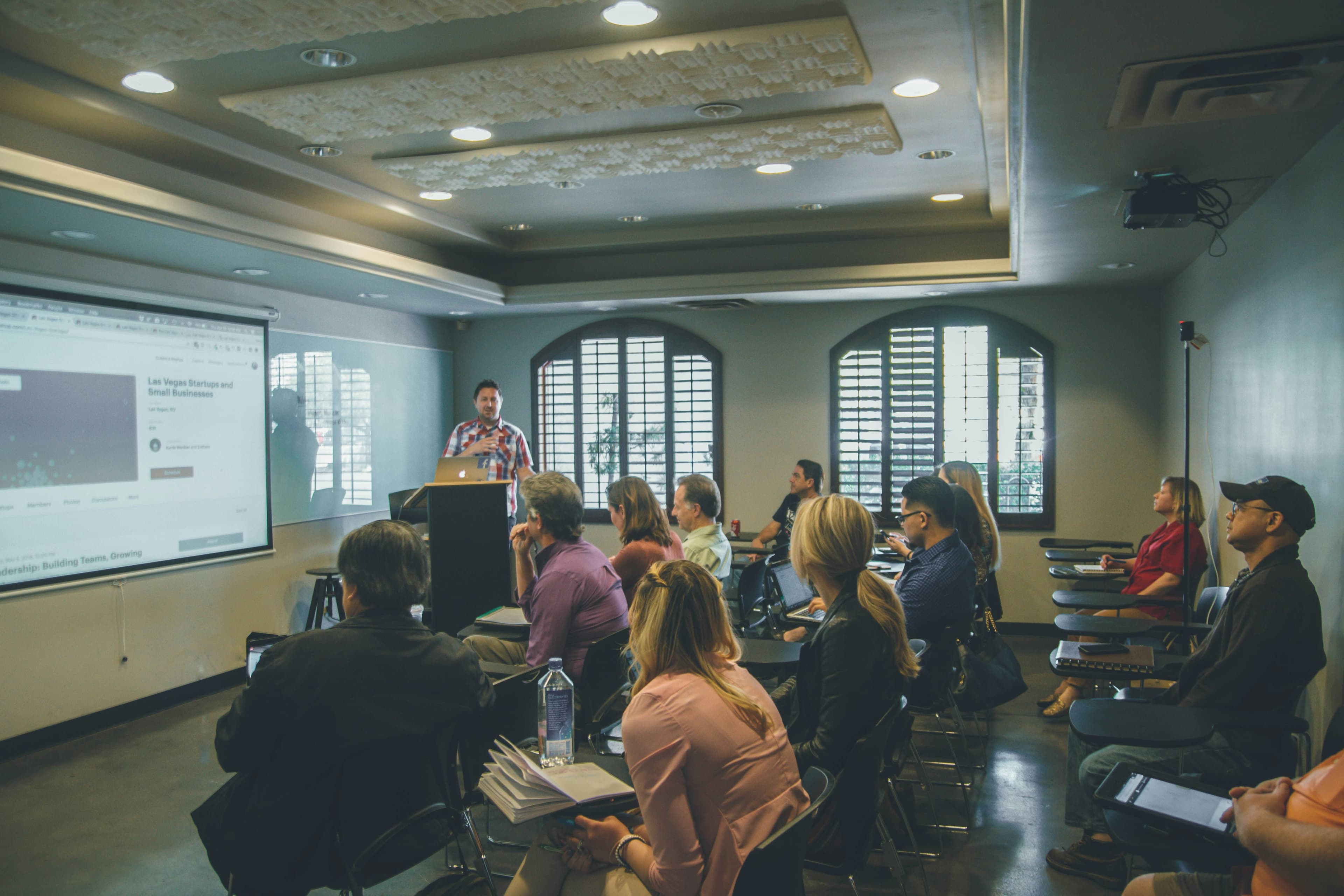
The written parts of the Goethe-Zertifikat B2 are the ones people study for. The speaking part is the one they lie awake over. That's backwards, because the Sprechen module is the most predictable part of the whole exam. It runs to a fixed script, it lasts about 15 minutes, and you get a partner in the room with you the entire time. Once you know exactly what happens between the moment you sit down and the moment the examiners say "danke", most of the fear evaporates. Here's the whole thing, in order.
How the Goethe B2 speaking exam is structured
The Sprechen module has two parts, and you sit it as a pair with another candidate. Total speaking time is roughly 15 minutes per pair, and before that you get 15 minutes of preparation time on your own. Two examiners are in the room: one runs the exam and talks to you, the other mostly sits, listens, and grades. Neither is there to trip you up.
The two parts are:
- Teil 1 (Vortrag / presentation): you give a short structured talk, about 4 minutes, then take a follow-up question.
- Teil 2 (Diskussion / discussion): you and your partner exchange views on a topic, about 5 minutes.
That's it. No sight-reading, no surprise role-play, no "describe this random photo" curveball. The format is the same at every test center in the world, and you can rehearse both parts down to the phrasing before you ever book a date.
You're paired with a real candidate, not an actor. If there's an odd number of people, one person sits a solo version with an examiner playing the partner and slightly adjusted timing. You don't choose your partner, and you don't need to. You're graded entirely on your own German, never on how good or bad the other person is.
The 15 minutes before you speak
You prepare alone in a quiet space, usually a separate room or a corner, and you're allowed to make notes. This is the part candidates waste most often. Fifteen minutes is enough to build a real structure and not enough to write out a full script and memorize it. Don't try. Examiners can hear a read-aloud script instantly, and it costs you on the "coherence" and "spontaneity" side of the grade.
Use the prep time to jot a skeleton: your position, three or four points, one example each, and a closing line. Bullet points, not sentences. You'll glance at these notes while you speak, which is completely allowed. What you're building is a map, not a manuscript.
Teil 1: the presentation (about 4 minutes)
You're handed a task card with a choice of two topics and you pick one. Each topic is a question or statement about everyday life ("Should children have smartphones?", "Is working from home better than the office?"), and it comes with a small set of prompts telling you what to cover.
The presentation has a job, and it's not "talk about the topic." It's this: introduce the theme, lay out different options or positions, weigh the advantages and disadvantages of each, and then state and justify your own view. Structure it like a mini-essay out loud, with an introduction, a middle, and a conclusion. Examiners are specifically listening for that shape.
After your roughly four minutes, your partner asks you a follow-up question about what you just said, and you answer it. Then the roles flip: your partner presents their topic, and you're the one who asks the follow-up. So you're never just performing and switching off. You have to actually listen to your partner's talk so you can put a sensible question to them.
The single highest-value thing you can rehearse is transition language, the connective phrases that hold a structured argument together: "Einerseits... andererseits", "Ein Vorteil dabei ist", "Im Gegensatz dazu", "Aus diesen Gründen bin ich der Meinung, dass". These are what push you from "can string sentences together" into "can structure a thought", which is exactly the B2 bar. A dozen of them, drilled until automatic, do more for your score than another 200 vocabulary words.
Teil 2: the discussion (about 5 minutes)
Now you and your partner are given a single topic to discuss together, and this part is a genuine two-way conversation. You exchange viewpoints, respond to each other's arguments in real time, agree, push back, and try to move the discussion somewhere. It's not a debate you "win". It's a demonstration that you can hold a spontaneous exchange in German.
This is where a lot of otherwise-strong candidates go quiet, because it's the one part you can't fully script. The fix is the same skill you use in a real conversation: react to what your partner actually said. "Das sehe ich anders, weil...", "Da stimme ich dir zu, aber...", "Wie meinst du das genau?" Phrases that hook onto the other person keep the discussion alive and show the examiners you're listening, not reciting. If your partner freezes, a good move is to gently pull them back in ("Und wie siehst du das?"), which reads as strong communicative competence, not as covering for them.
How the speaking exam is scored
The Sprechen module is marked out of 100 points, and you need 60 to pass, the same threshold as every other Goethe B2 module. The examiners grade on four criteria:
- Erfüllung der Aufgabenstellung (did you do what the task asked, and cover the points?)
- Kohärenz (does it hang together, with logical flow and connectors?)
- Wortschatz (range and accuracy of vocabulary?)
- Strukturen (grammatical range and correctness?)
Notice what's not on that list: a perfect accent, and zero mistakes. B2 is an "independent user" level, not a native one. You're allowed to make errors, hesitate, and self-correct. Examiners are trained to grade communicative effectiveness, so a candidate who speaks fluently with a few slips scores better than one who's grammatically cautious but stilted and slow.
The most common way to lose points isn't grammar. It's not covering the task. If Teil 1 asks you to weigh advantages and disadvantages and you spend four minutes only arguing your own opinion, you drop marks on the very first criterion no matter how fluent you sound. Read the prompts on your card during prep and physically tick off each required element as you plan.
The modular safety net
The Goethe B2 has been a modular exam since 2019: Lesen, Hören, Schreiben, and Sprechen are four independent modules, each scored out of 100, each passed at 60. You can book all four together or sit them separately, and crucially, if you fail one you keep the three you passed and rebook only the module you missed.
For the speaking exam specifically, that changes the stakes. If Sprechen is your weak point, you don't have to re-sit the whole certificate to fix it. A failed speaking module is a single-module rebook, not a full-exam redo, which is worth remembering the moment nerves start telling you the entire day rides on these 15 minutes. It doesn't. We cover exactly how the retake math works in what happens if you fail the Goethe or telc exam.
How to actually prepare for it
Two things move the needle more than anything else. First, practice out loud with a real partner, not in your head. The discussion part especially only gets comfortable when you've done it with another person a handful of times. Second, use the official Goethe practice materials, because the sample speaking tasks (Modellsatz / Übungssatz) are the exact format you'll get on the day, prompts and all.
The official free practice area for the Goethe-Zertifikat B2. It has the full sample exam (Modellsatz) including the speaking tasks, so you can see the real Teil 1 and Teil 2 prompts, plus the exam's terms and grading criteria. Practice against these, not third-party approximations.
If you want to hear what a strong B2 presentation actually sounds like before you build your own, there are recorded model performances of the Sprechen tasks that walk through the structure examiners reward.
Rehearse the two parts until the shape is automatic, walk in with a skeleton instead of a script, and treat your partner as a collaborator rather than competition. The Goethe B2 speaking exam feels enormous from the outside and turns out to be the most rehearsable 15 minutes of the whole certificate. Once you've done it out loud four or five times, the room holds no surprises.